The Care Quality Commission (CQC) has released its report rating adult social care for the Royal Borough as requires improvement.
The care watchdog looked at nine areas spread across four themes to assess how well the authority is meeting its responsibilities.
It has given each of these nine areas a score out of four – with one showing significant shortfalls and four showing an exceptional standard.
The Royal Borough’s scores were either two or three.
It scored three for assessing people’s needs; supporting people to lead healthier lives; and safe pathways, systems and transitions.
Meanwhile, it scored two for equity in experience and outcomes; care provision; integration and continuity of care; partnership and communities; safeguarding; governance, management and sustainability; and learning, improvement and innovation.
James Bullion, CQC’s chief inspector of adult social care and integrated care, said: “At this assessment we found an authority who had a new chief executive, director of adult social services (DASS) as well as new portfolio leads and committee chairs following local elections.
“It was encouraging to see the positive, professional relationships with healthy challenge that had already been established.”
However, Mr Bullion said: “We found people were waiting too long for a full assessment of their occupational therapy needs.
“Some people waited up to six months, and at the time of the assessment there were almost 200 people waiting for a full occupational therapy assessment.”
Staff also ‘weren’t always able to deliver timely annual reviews of people’s care and support needs’.
There was a ‘strong private care sector in the borough as a high number of people paid for their own care’.
“This made it difficult for the local authority to monitor whether people were placed in services that met their care needs,” said Mr Bullion.
If a person’s savings fell below the threshold, the authority had to step in to support and cover the costs, which were often above budget.
This put extra pressure on them to make the market more sustainable and ensure people were receiving safe, effective care.
The assessment team found that young carers were also not always identified proactively, and it was sometimes difficult for them to access assessments.
The authority’s access to data, to help them make informed decisions, was limited, as early work had yet to come to fruition.
Access to advocacy was also sometimes limited.
However, the assessment team also found leaders had a good understanding of where they needed to improve and where CQC identified shortfalls, there were already plans underway to address them.
Staff and leaders had a good understanding of diverse communities across the borough, and they knew who their seldom heard groups were.
Data showed the local authority performed particularly well in how safe people felt, with 80.77 per cent of people who used services stating they felt safe, significantly above the national average of 69.69 per cent.
In the adult social care survey 87.5 per cent of people said they felt they had control over their daily lives, which is significantly higher than the national average in England of 77.21 per cent.
Councillor Catherine del Campo, cabinet member for adult services, health and housing services said: “Our rating reflects the fact that we are working hard to deliver a good service against the backdrop of increasing demand and severe financial constraints.
“Whilst the CQC report shows that we have missed out on a good rating by one point, the report sends the clear message is that our improvement plan is the right one and as transformation work becomes embedded in everyday practice, we strengthen our position going forwards.”
Most read
Archive image of M4
Top Articles
Adam Bouaziz. Photo from the family via Thames Valley Police.
Appearing as a witness, the van driver who ran over 18-year-old Adam Bouaziz last year became distressed and left the court suddenly during his testimony.
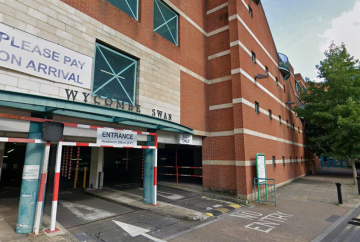
A man was stabbed in the Wycombe Swan threatre car park on Tuesday (image: Google)
Dasharn Gregg, of Haynes Close, had been arrested on suspicion of attempted murder over the stabbing, which left a 19-year-old man needing hospital treatment.
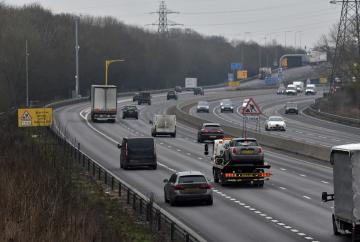
Archive image of M4
National Highways has warned the motorway is shut between Junction 6 (Slough/Windsor) and Junction 5 (Langley Interchange).
© Copyright 2024 Baylis Community Media CIC All right reserved