05:01PM, Friday 20 March 2026

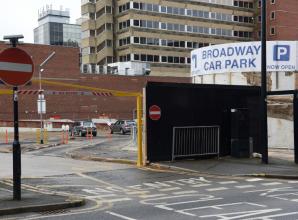
Archive picture of Broadway Car park.
Dire consequences of the ‘nuclear option’
I read with dismay the proposal of John Baldwin (Viewpoint, March 13) that councils should unite to take on the Government.
Here are the dire consequences adapted from Gemini.
Reducing repayments to the Public Works Loan Board (PWLB) is a ‘nuclear option’ for a UK council.
Because PWLB loans are technically secured against all future revenues of the council (under the Local Government Act 2003), a council cannot simply ‘walk away’ from the debt without triggering a chain of severe legal, financial, and political consequences.
As of 2026, the consequences of a council failing to meet its scheduled repayments – or attempting to unilaterally reduce them are:
1. Immediate ‘blacklisting’ from future finance
The PWLB is the lender of last resort and the primary source of cheap capital for infrastructure.
Access denied: HM Treasury guidance (updated for 2025/26) states that the PWLB will not advance new loans if there is a ‘more than negligible risk’ that they won't be repaid.
2. The ‘Section 114’ path (technical bankruptcy)
Reducing debt repayments is usually a sign that a council cannot ‘balance its books,’ which is a legal requirement.
Loss of control: The Chief Financial Officer would be legally required to issue a Section 114 notice.
Government commissioners: Within weeks, central government usually sends in ‘commissioners’ (unelected officials) to take over the council’s finances. These individuals have the power to override local councillors to ensure debt is paid.
The ‘fire sale’: To pay the PWLB, commissioners often order the rapid sale of council-owned land, buildings, and commercial investments, often at ‘fire sale’ prices that represent poor value for the taxpayer.
Even if he managed to unite 100 councils to do the same thing, and government was forced to capitulate, it would only result in Rachel Reeves struggling even more to balance her books.
JEAN MOOY
Chiltern Road
Burnham
Please talk to us about what we want and need
Firstly, we would like to thank the Advertiser and the LDRS for attending our meeting on March 9.
The article you published last week brilliantly highlighted the concerns we raised.
The key issue is that disabled people are too often merely permitted to participate in the everyday life, rather than being actively encouraged and enabled to do so.
What is needed is a level playing field.
We do not need pity, nor do we need decisions made for us.
We need the opportunity to make those decisions for ourselves, just as everyone else does.
We do not need ineffectual, performative political grandstanding.
What we need is a community willing to work with us to make this situation fair.
In this instance, we were not invited to discuss the issue – we were simply told when already decided.
This highlights a wider and deeply troubling pattern: far too much is done for disabled people without involving them at all. That is wrong.
Disabled people are capable individuals who can and should be trusted to speak for themselves.
Society often further disables people through the way it treats them.
While this may not have been the intent here, it has been the outcome.
It is vital that everyone understands this conversation must start from a position where we will not accept the status quo quietly simply because it is uncomfortable or inconvenient to address.
This does not mean that we are necessarily seeking the reinstatement of democratic services.
What we are seeking is dialogue.
Please talk to us about what we want and need – do not presume.
What we do require, however, is that our meetings are accessible to our members and to the public, and that they are transparent and open so that everyone can see and understand what takes place.
If anyone can genuinely assist us with the sound and accessibility issues we are currently experiencing – whether through grant funding, affordable equipment, or practical advice – we would welcome hearing from you at info@rbwm-dif.co.uk
LIZZIE JONES (chair) and KIRSTY NORTHAM (vice-chair)
RBWM Disability and Inclusion Forum
Rubble-filled car park felt like a disaster film
We made a rare visit to Maidenhead town centre on Mother's Day afternoon as my wife had been given tickets to see a film at the Odeon.
After following signage for the Broadway car park we ended in a rubble-filled, bleak and wind-swept, so-called car park and after figuring out how to use the pay and display machine we were charged £6.60 for the ‘privilege’ of a three-hour stay in Tumbleweed Town!
The cost reminded me why we stopped going to Maidenhead town centre!
Actually though,when we first pulled up I thought we'd mistakenly driven into a film set and a movie featuring a ‘bomb site’ was being made...
DAVID COX
Bath Road
Maidenhead
Most read
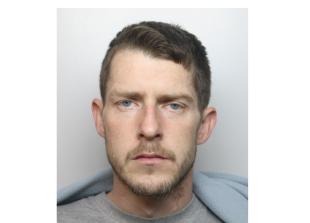
Anthony Robertson, 36, of Patrick Haugh Road, Bicester.
Top Articles

A woman was found dead in a car park outside Iceland and B&M Home Store in Montrose Avenue on Saturday afternoon (February 21).
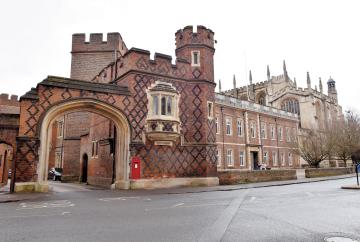
A teenage boy has been found dead at the historic Eton College.
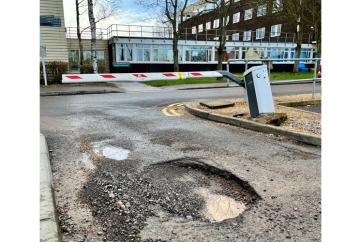
Three car parks at the Slough hospital – used by patients, visitors and staff – cost £4 for two hours, with daily rates charged at £9.50 and a seven-day pass available for £22.
© Copyright 2024 Baylis Community Media CIC All right reserved